Ultimate GSA Search Engine Ranker Global List Results for Maximum Verified Links
GSA SER Global Site List
What is the GSA SER Global Site List?
The GSA SER global site list is a pre‑compiled, ever‑expanding database of target websites, platforms, and submission endpoints used by GSA Search Engine Ranker. Instead of scraping targets on the fly, the software uses this dedicated list to identify where backlinks, social signals, and other off‑page assets can be created. The list includes forums, comment sections, article directories, social networks, wikis, pingbacks, and thousands of niche‑specific platforms across dozens of content management systems.
Why a Quality Global Site List Matters
A carefully curated GSA SER global site list transforms the tool from a generic spam engine into a precision creator. It directly impacts campaign success, link diversity, and domain authority flow. Here is why site list quality should never be an afterthought:
- Higher Verified Submission Rates: Clean lists contain working URLs with active forms, bypassing dead domains.
- Diverse Link Profiles: A global mix of ccTLDs, authority stats, and platform engines mimics organic growth.
- Time Saved on Identification: SER can skip the internal site detection stage and move straight to account creation and posting.
- Better Tiered Linking: Powerful lists fuel Tier 1 properties without polluting them with toxic footprints.
- Niche Relevance: Many modern lists are pre‑tagged by category, letting you filter for health, finance, tech, or regional footprints.
How a Global Site List Powers SER Campaigns
When you load a comprehensive GSA SER global site list, the engine parses each entry and looks for matching engine rules. It can then register accounts, fill captchas, and drop contextual links based on your project settings. The list works across multiple engine types:
- Article directories and web 2.0 blogs – foundational Tier 1 buffers.
- Social bookmarking sites – quick indexing signals.
- Forum profiles and signature links – authority building for aged domains.
- Comment platforms (do‑follow and no‑follow) – referral traffic and diversity.
- Wiki and trackback URLs – passive link velocity without manual seeding.
A robust global list also includes JSON or .ini engine identifiers so SER automatically selects the correct submission routine without mismatches or failures.
Verified vs. Unverified Lists
Not every GSA SER global site list is equal. Unverified dumps often contain duplicate, banned, or JavaScript‑challenged domains that cause a flood of “download failed†errors. Verified lists undergo routine testing. They are pinged for alive status, captcha complexity is noted, and PR/DA metrics are appended. A verified global site list can push your verified link ratio from 5% to over 40% on a fresh run.
Building and Maintaining Your Own Global Site List
Many advanced users stop relying on third‑party packs and train SER to build a custom GSA SER global site list. This is achieved through search engine scraping, competitor footprints, and the internal “site list builder†function. Start with these steps:
- Identify fresh footprints for your target engine type (“powered by wordpress†+ “leave a replyâ€).
- Load footprints into SER’s search scraper with multiple proxies and search engines.
- Let the tool auto‑verify the harvested URLs against captcha solvers.
- Export only “verified†targets and prune duplicates weekly.
- Enrich the list with Moz DA, Spam Score, and Majestic Trust Flow columns using external link tools.
Buying a GSA SER Global Site List: What to Look For
If you prefer an out‑of‑the‑box GSA SER global site list, focus on sellers who provide recent verification dates, engine‑sorted folders, and clear metrics. Avoid any list that hasn’t been updated in the last 30 days; search engine algorithms and webmaster takedowns stale‑out platforms quickly. The best providers include a mix of:
- Contextual engines (Article, Social Network, Web 2.0).
- Low OBL (Outbound Link) footprints.
- Platforms supporting password‑reset and email verification routines.
- Separate “private†or “semi‑private†networks where links tend to stick longer.
- Detailed submission guides for tricky engines.
Integrating the List into GSA SER
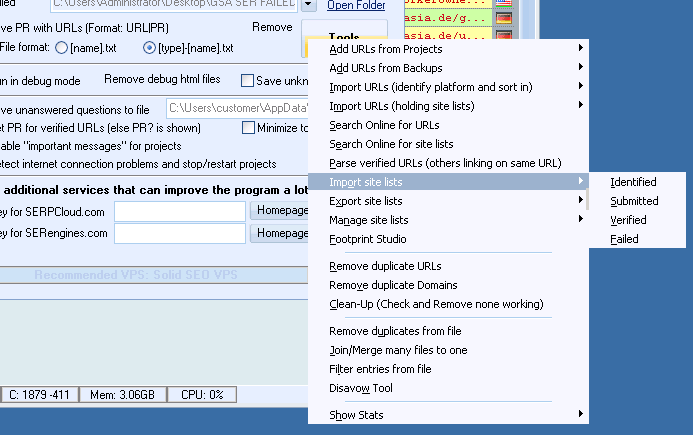
After obtaining a GSA SER global site list, more info place the .csv or .txt file in the “Site Lists†folder. Then point your project to it under Project Options > Where to submit/verify and enable “Use global site list if no target URL categories selected.†This directs SER to pull only from that file, giving you complete control over inventory. Pair this with a daily pop3 email account for email activation links and the software will process the list automatically.
Common Pitfalls and How to Overcome Them
A GSA SER global site list can deliver explosive growth or burn domains if handled poorly. Keep these cautions in mind:
- Platform footprint overlaps: Too many links from the same engine type can trigger algorithmic filters. Always blend engines.
- Geo‑irrelevant spam: A global list mixed with Chinese, Russian, and Arabic domains may look unnatural if your money site targets only the US. Pre‑filter by TLD.
- Captcha cost explosion: Some lists are packed with Recaptcha and hCaptcha sites. Know your captcha solver budget before loading a massive list.
- Neglected email verification: Accounts created but never verified will pollute logs. Use catch‑all emails and let SER auto‑click verification links.
Advanced Uses for the GSA SER Global Site List
Beyond backlinks, the list can feed other SEO workflows. Use it to identify live footprints during competitor reverse‑engineering, to bulk‑check PR status with outsource teams, or as a seed list for custom indexer API pushes. Combined with a scheduler, it can maintain a steady link velocity curve that mimics natural site growth.
FAQs: GSA SER Global Site List
Q: How often should I update my global site list?
A: Ideally every 10–15 days. SER engines change quickly, domains go offline, and captcha types evolve. A list older than a month will yield a drop in verified links.
Q: Can I use one global list for all my projects?
A: Yes, but segment it. Create separate lists for Tier 1 (high authority, low OBL) and Tier 2/3 (volume platforms). Overlapping footprints between tiers can create a detectable pattern.
Q: Does a larger list guarantee better results?
A: Not necessarily. A focused GSA SER global site list of 50,000 clean, niche‑relevant engines often outperforms a 1 million entry dump full of dead sites. Quality trumps quantity.
Q: What file formats are accepted for the site list?
A: GSA SER accepts .txt, .csv, and .ini files. It’s best to keep one URL per line or use a structured CSV with columns for URL and engine type.
Q: Will a global site list automatically create do‑follow links?
A: No, the list provides targets; link attribute depends on the platform. You can instruct SER to prefer no‑follow or ignore certain engines, but the list itself doesn’t guarantee link juice.
Q: Can I share my custom GSA SER global site list between multiple VPS instances?
A: Absolutely. Place the file in a shared cloud folder or sync it via Dropbox, then point each SER installation to the same network path. This keeps all servers working from one master list.
A well‑maintained GSA SER global site list remains one of the strongest levers for scalable off‑page SEO, turning the ranker into a predictable, repeatable link‑building machine when paired with smart filtering and tiered asset protection.